
Rebuilding After Fire: A Day Volunteering at Westgate Park
Updated: Dec 1, 2025
This past weekend, I spent the final volunteer day of 2025 at Westgate Park, and it reminded me once again why I love environmental work, not just as a profession, but as a way of living.
Gardening as Connection
Gardening is one of the simplest and most tangible ways to feel aligned with nature. Think about it: you’re literally in contact with the earth. You dig, you clear, you shape, and you plant, almost like becoming a tiny engineer of new ecosystems. There’s intention in every movement, and calmness in the repetition.
There’s also something grounding about knowing that what you’re touching, tending, and nurturing will outlive you.
A Landscape Changed by Fire
The area we worked in (a quiet patch near the small horseshoe lake) was one of the places touched by the December 16th, 2024 fire.
Scientifically, post-fire soil often becomes more fertile as nutrients locked within vegetation return to the earth through ash. Ecologically, however, they can act as both destruction and renewal. It’s a strange paradox of nature: something so dramatic and intense can create the perfect conditions for new life.
But fertility doesn’t always mean balance...
In Westgate Park’s case, that nutrient-rich soil didn’t just invite native plants back, it also encouraged the rapid growth of weeds like Ehrharta. And while they may look soft, green, and harmless, they aren’t part of Australia’s ecological story. They crowd out indigenous plants, alter habitat structure, and interrupt the slow, natural rhythm of regeneration.
So the fire didn’t just leave behind burnt trunks and open spaces. It left behind an instruction, a reminder that recovery requires intentional care, and that without it, the landscape can shift in ways that look healthy on the surface but quietly undermine the ecosystem underneath.
Restoring What Belongs
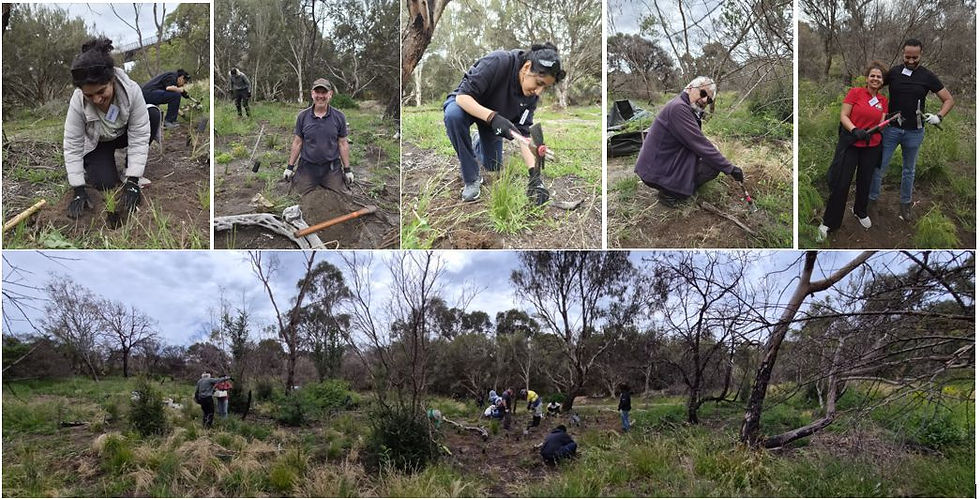
Our goal as volunteers was simple but meaningful: Plant more indigenous species to help the ecosystem stabilise and reclaim its natural identity.
(If you’re curious about the species found in Westgate Park, you can explore the full plant list here.)
Kneeling in fire-affected soil, placing indigenous seedlings into the earth felt like participating in a quiet ceremony, not dramatic, but deeply hopeful.
But restoration isn’t just about the plants we put into the soil, it’s also about the community that gathers around that shared purpose.
One of the best parts of these community days is the people. I met a 70-year-old writer who joined us for the event — 70! And out there volunteering, planting, chatting, and sharing stories.
It was a subtle reminder that caring for the environment isn’t limited by age, background, or physical strength. If anything, the presence of people like her makes the work feel even more meaningful.
Closing the Day With Community
After hours of planting and restoring, we wrapped up with a BBQ. Laughter, shared food, and the beautiful ease that comes after working with your hands. Together we raised $105 for Westgate Biodiversity, which will support more community-led restoration in 2026.
A gentle close to a day that proved once again that restoration thrives where community does.


Comments